Olesia Kryvolapova
Critical Reflection
Project
After much reflection, I decided to focus my research on my childhood in Ukraine during the 1990s, as it was a significant period both for myself and for the country. My personal development unfolded in parallel with the nation’s transformation, meaning that my identity was being shaped at the same critical moment as the emerging collective identity of Ukraine. Through this connection, I aimed for my work to reflect not only my personal memories but also the broader atmosphere and spirit of that time and place.
Through a series of interviews with people who were already adults during that decade, I discovered that my memories and impressions differ greatly from theirs. Although we shared the same geographical and historical context, our perspectives were formed by entirely different experiences. Their worldviews were still strongly influenced by the values and structures of the Soviet era, while mine was only beginning to develop in the new, uncertain reality of independence.
In a way, I believe that my perspective—naive and unformed as it was—may capture the essence of that period even more truthfully than the views of those who had lived through the Soviet system. Having no fixed beliefs or ideological frameworks at the time, I was able to observe my surroundings without preconceptions. Yet, since my mind was still in the process of formation, many of the events I witnessed were absorbed emotionally rather than rationally. The world I remember is therefore filtered through a child’s perception—intuitive, fragmented, and deeply emotional.
I aimed to visually represent the flow of time and the distinctive character of that period in my life by using photographs from my family archive, featuring my younger self and other family members. These materials hold profound personal significance, as some of the images include people who are no longer alive. My intention was to find a meaningful way to work with these photographs without reducing them to simple nostalgic reflections on the past.
To achieve this, I transferred the images onto ceramic blocks cast from old wooden pieces. I felt that using wood taken from old furniture provided a fitting foundation for my idea. I combined the photographs with monoprints made from children’s clothing, allowing me to convey the emotional atmosphere of that time in a more associative and visually accessible way. Both the fragments of clothing and the photographs serve as symbols of a distant past.
I was particularly drawn to the idea of presenting the works as blocks, as this format offered flexibility in arrangement and composition. One of the most important aspects was to express the right mood through visual form. My goal was to create a surreal space reminiscent of an apartment—intimate yet non-functional—something that could exist only through fragile fragments of memory.
To reinforce this concept, I placed the ceramic blocks into improvised drawers, echoing the real spaces where photo albums and clothing might once have been stored.
Another important material I used as the foundation of my work was my childhood drawings. I wanted to present them not merely as children’s artworks, but as visual fragments that evoke a distant and fragmented past. I believed that the drawings could represent a specific time and place, while the process of printing could serve as a connection to the present.
As Walter Benjamin wrote, “Memory is not an instrument for surveying the past but its theatre. It is the medium of past experience, just as the earth is the medium in which dead cities lie buried.”
This idea deeply resonates with my approach — my prints and laser-cut plates act as a kind of stage where forgotten memories are re-enacted. Through them, I seek to uncover what remains buried beneath the surface of time, transforming childhood spontaneity into deliberate reflection.
The etchings were designed not only to symbolise childhood memories but also to visually echo the appearance of genuine children’s drawings — imperfect, yet proudly displayed on the walls. While printing, I deliberately tried to preserve the slightly messy and intuitive quality that characterised my early creative expressions. I combined soft ground and aquatint techniques, as this approach best conveyed the tactile and emotional atmosphere I aimed to evoke.
I also used colours similar to those found in the ceramic blocks. This choice helped create a sense of visual and emotional continuity between the elements, reinforcing the impression that they all belong to the same imagined “home” space.
Another element of my visual exploration of space was the use of fragments of actual old furniture. I incorporated them in two ways: as printing objects, which I hand-printed, and as physical components within the installation itself. This approach also became a way to connect time and place — my past in Kharkiv and my present in London. Just as I exist between these two spaces, my artworks also inhabit both. Simply displaying the furniture as found objects did not feel sufficient; I wanted to transform them so that they became integral to the conceptual and visual structure of the work rather than serving as mere decoration.
There are numerous possible configurations for how the overall installation can be built and arranged. It can evolve and expand into different forms and dimensions, taking the shape of tables, drawers, or abstract, non-functional constructions. Through this variability, the installation reflects the fluidity of memory — constantly shifting, reforming, and resisting fixed boundaries.
The shapes of the furniture, which are both distinctive and evocative, combined with the laser-cut images derived from my childhood drawings, effectively support the idea of creating symbolic objects that exist between categories — neither functional furniture nor children’s artwork. They occupy an ambiguous space, containing elements of both yet belonging fully to neither. These hybrid forms serve as metaphors for memory itself: fragmented, reinterpreted, and suspended between material reality and emotional recollection. Rather than functioning as practical objects, they hold value as reflections of personal history — a means of preserving and evoking the atmosphere of a specific time and place.
I presented the installations made from these objects at Millbank Tower and during the Summer Show. On both occasions, my goal was to create my own interpretation of a living space — a reconstructed environment built from fragments of memory and material traces.
Another part of my practice is a short animation that incorporates various elements I used previously. In this work, I combined old photographs and etchings, adding simple animation to weave them together. Through movement, I aimed to connect the past and present, giving a sense of life to still images and extending the narrative of memory beyond physical form.
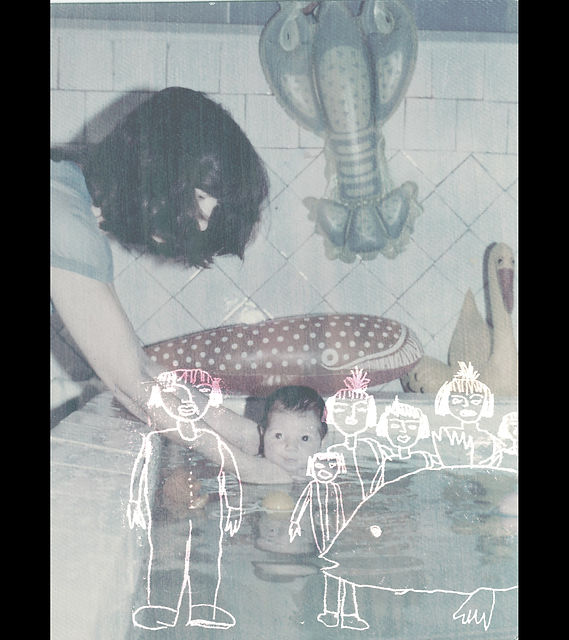


In addition to my main project, I also organized a smaller personal exhibition at Peckham Levels, titled Small Objects. This exhibition focused on the theme of memory and personal history, and consisted of a series of monoprints created from children’s clothing. Through these prints, I aimed to reflect the intangible traces of a lost past.
Rather than representing the garments themselves in a literal way, the works were intended to serve as symbols—echoes of the memories, emotions, and lived experiences connected to those objects. By transferring the textures and forms of clothing onto paper, I tried to capture a sense of presence that remains even after the original objects have lost their practical function. The exhibition became a quiet and intimate exploration of how personal history can be preserved and reimagined through material traces and artistic processes.

Professional Workshops
As part of my research, I organised a series of workshops with children who have arrived in London for the same reason as me - to escape the war in Ukraine. To facilitate these events, I collaborated with the Ukrainian Cultural Centre in Richmond. The workshops were structured around themes that resonate with my broader research focus — “home” and “family.”
The main objective was to create a safe and supportive space where children could express their emotions and experiences related to these themes without evoking distress or sadness. Through artistic engagement, I aimed to offer them an imaginative environment in which they could explore these complex feelings indirectly and creatively. Contrary to my initial expectations, most of the children produced surprisingly positive and hopeful artworks.
The workshops introduced participants to a variety of artistic techniques and materials. The first session focused on simple monotype and collage, while the second explored different black-and-white graphic approaches. Beyond encouraging self-expression, I also wanted to equip the children with new creative tools that would help them communicate their thoughts and emotions more confidently through art.


The artworks created during these sessions became an important reference point for my research. They enabled me to draw comparisons between my own early artistic expressions from childhood and the ways in which contemporary children convey their experiences. One key observation was that, regardless of historical moment, geographical location, or socio-political context, children consistently demonstrate an innate ability to perceive the world with optimism. At the same time, each historical period carries its own unique circumstances, which inevitably shape how children interpret and visualise their surroundings


Despite certain differences, there are also striking parallels between the 1990s and the present. In both periods, children have been compelled to adapt to rapid cultural and social transformations unfolding around them.
After reflecting on the outcomes of the workshops, I began considering how to integrate all the collected materials into the upcoming Research Festival. I ultimately decided to combine photographs of my hometown with the artworks created during the workshops. My goal was to explore how both places and generations have been transformed over time and through the experience of living in extreme circumstances. This comparison can be seen through the dialogue between my own childhood drawings and the works produced by the children in the workshops — together, they reveal how the world is perceived through the eyes of a child across different periods and contexts.

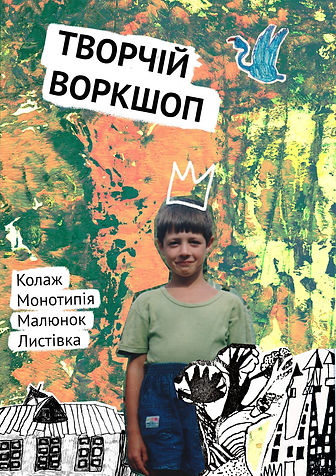
Process
and announcement
of
workshop
in Ukrainian Social
Club,
Richmond
Visit to Hometown
Another important stage of my research was my visit to my hometown, Kharkiv. It was my first time there since the beginning of the full-scale war, and the contrast between past and present was deeply striking. This experience felt both relevant and necessary, as the foundation of my project is rooted in my childhood in Kharkiv. To make the research more complete, it was essential for me to reconnect those early memories with the city’s current reality.
Just as I compared the artworks created by my younger self with those made by Ukrainian children in my workshops in Richmond, I also aimed to compare the Kharkiv of my memory with the Kharkiv of today. This process allowed me to examine how both the physical and emotional landscapes have changed over time, and how memory continues to interact with the contemporary state of a place.


In the photographs, you can see the Cultural Centre, the central pharmacy, and the wall of an apartment complex with a notice about my inspections. Almost the entire city looks like this now. The children who are currently growing up and forming their identities will remember the city in this state years from now. It is fascinating to consider how this reality is being shaped in their minds. Just as my memories of the 1990s differ from those of the older generation, their future memories will inevitably differ from mine.
From the results of the workshop, I observed that children’s minds always filter reality. Their drawings of home and loved ones do not reflect the visible traces of war that are so apparent to me.
I also felt that directly asking children about their experiences of living in Kharkiv during the war would be ethically inappropriate. For this reason, I decided instead to interview local artists who are currently living and working there.
Almost all of my friends had moved from Kharkiv to safer parts of Ukraine. But I managed to record short interviews with my former university classmate, Olha, who still lives there:
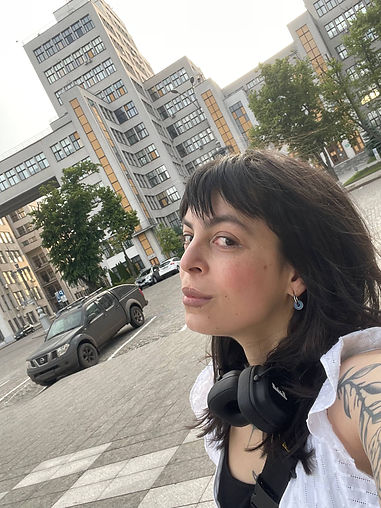
Original audio from interview on Ukrainian

Olha`s Instagram
What do you do?
I’m an illustrator. These days I mostly work on adult books, a bit of magazine illustration, and my own personal projects.
Did you leave Kharkiv during the full-scale invasion?
Yes, I left for about seven months to Poland, then returned to Kyiv. Later, in October 2024, I came back to Kharkiv—and I’ve been living here ever since.
Was it comfortable living abroad?
Honestly, I like it better in Ukraine.
So, what made you decide to return?
It was because of a guy. I fell in love, visited him in Kyiv, and when I went back to Poland, I realized I wanted to spend more time with him. So now we’re together.
Do you feel life has changed since then? Or is it more or less the same—you just get used to it?
You do get used to things, of course, but life has changed a lot. For example, I never used to carry a first aid kit or tourniquets. And overall, I feel like everyone is nervous, exhausted, and really worn out.
Do you think the place where you live is connected to the formation of your personality?
Well, absolutely yes — at least in the sense that I live in Kharkiv, and right now my everyday social circle consists 90 percent of either military personnel, partners of military personnel, or volunteers. This inevitably sharpens your focus in a certain way. I can’t pretend that the war doesn’t exist or that everything is fine while living in Kharkiv. That’s just how it is.
Does living specifically in Kharkiv influence your artistic practice?
Does this affect my artistic practice? I think only in the sense that, from time to time, I don’t get enough sleep because of the Russians, and I end up doing my work purely through willpower and moral effort. Otherwise, I’m not sure. I don’t consciously feel this influence, though perhaps it is there — it’s something that’s probably easier to notice from the outside.
Do you plan to stay here?
Yes, ideally for the rest of my life. I hope that will be possible soon.
Okay, thank you.
You’re welcome.
This short interview helped me gain a deeper understanding of the rhythm of everyday life. I believe that both in the 1990s and today, life in Kharkiv has been marked by danger and instability, and in both periods people have had no choice but to adapt. My conversation with Olha revealed certain parallels and contrasts between these times. For instance, although the level of danger today is significantly higher than in the 1990s, people now have access to much more information, which allows them to better comprehend and navigate their circumstances.
When analyzing whether the place where one lives is connected to the feeling of “home,” the answer is, of course, yes — but ultimately, the most important factor is where one’s family is. The same applies to childhood: children are often more attached to their family than to the physical place where they live. Naturally, I was influenced by the social and political situation in the country while growing up, just as children are now, but it remains difficult to determine to what extent such external circumstances shape one’s personality and worldview.
One thing is certain: regardless of the situation, people — whether children or adults — tend to adapt and find ways to organize their everyday lives despite the surrounding challenges. This became evident through my interview with Olha, my interactions with others, and even through the sounds of the city itself. I recorded two videos in Kharkiv on the same day — one capturing the air raid alarm, and the other showing a street musician performing. Both represent the sounds of the city, reflecting its time, mood, and resilience — sensations I hope to continue exploring through my future artworks.
After visiting Kharkiv and organizing the workshops, I wanted to express this experience through my artworks, which would become both a continuation and a logical development of my project. Although I plan to continue this research further, I also want to bring it to a coherent conclusion by the end of this term. My aim is to create something conceptually similar to my earlier work but approached from a new perspective.
I want it to be clear that it follows the same idea, yet shifts the focus — from my childhood and Kharkiv in the 1990s to Kharkiv in 2025 and Ukrainian children in 2025. I am hoping to expose the general feeling and atmosphere of this time.
I finalized this concept after visiting several exhibitions in different countries, which helped me to refine my approach and better understand how to visually communicate these ideas.
Exhibitions Visits
and influences
I was inspired by several different sources while developing the visual and conceptual framework of the project. These included not only artists but also places that reflect time, atmosphere, and mood.
The idea of creating an imitation of a lived space first came to me when I remembered the Apartment of Mitsov in my hometown of Kharkiv. Due to his mental illness, Mitsov began writing on all the surfaces and objects around him. As a result, his apartment gradually transformed into a kind of memorial in itself—a space that preserved traces of his presence, thoughts, and personal history.
Mitsov died alone and forgotten, without leaving behind any official archive of his life. Yet, as sad as this is, his apartment became well known within the local community. It reflected, in many ways, the general way of life of that time, capturing collective habits and atmosphere through a deeply personal space.


After deciding on the main idea, I began searching for ways to represent it, looking for artists who had worked with similar themes. The artist whose approach resonated most closely with what I wanted to achieve was Do Ho Suh and his exherbition in Tate Modern.
Suh is known for his large-scale installations that explore ideas of belonging, collectivity, individuality, and the tension between connection and disconnection. His practice investigates the complex relationship between architecture, space, memory, and identity, often using transparent fabric to recreate his former and current homes. Through these delicate, life-sized structures, he captures not only the physical aspects of domestic spaces but also the emotional and psychological dimensions that define them.
His approach strongly influenced my own thinking about how to represent “home.” Inspired by his method of reimagining familiar spaces, I decided to recreate my own home—not as a literal reconstruction, but as a reflection of how I remember it. This also led me to the idea of printing from real pieces of furniture. I was particularly inspired by Suh’s full-scale print of his former home, which demonstrated how memory can be translated into both a tactile and architectural form. I decided to also use the method by directly reprinting objects.


One of the things that helped me to organize my recent printmaking practice was an exhibition I attended by the photographer Boris Mikhailov. He is a well-known artist recognized for his documentary series that capture the transition between the late socialist and early independence periods. I visited exhibitions of his works both at the Contemporary Art Centre in Kharkiv and later at The Photographers’ Gallery in London.
Mikhailov uses simple yet powerful methods in his diary-like photo series to convey the atmosphere of a specific time and place. His compositions often combine collages of two contrasting images, fragments of handwritten text, added marker drawings, or even backgrounds made from a discarded dissertation he once found in the trash. While his techniques may not be entirely unique, they are remarkably effective — his works allow the viewer to feel the essence of that historical moment. Inspired by this approach, I also began to explore how photographs could represent not only objects or scenes, but the passage of time and the emotional tone of a particular era.


That emotional effect was exactly what I was searching for. Inspired by his approach, I decided to experiment with photographs I took in Kharkiv and combine them with children’s drawings created during my workshops. My aim was to find a visual language that could mirror the childhood of Ukrainian children today, just as I tried to reflect my own childhood in earlier stages of my project.
After finding inspiration in the use of photography as a metaphor for time and place, I discovered another artwork that strongly resonated with my ideas. This happened during my visit to the Museum of Contemporary Art in Kraków (MOCAK) in Poland. One of the exhibited works was a video piece by the Polish artist Dorota Mytych titled Un-Rehearsed.
In this work, the artist filmed the gradual dispersal of images made from soil and seeds. These images recreated historical photographs from the Ethnographic Museum of Kraków, as well as personal and press photos. It was a very clever and poetic way to represent the passage of time and history through the process of physical transformation — using simple, organic materials and the language of photo documentation. This work also made me realise that documentary photographs can be transformed beyond their factual nature to convey deeper emotional and conceptual meanings.


Another artist who influenced me is the London-based Ukrainian artist Natalia Millman and her project Letters to Forever. Her way of representing history and the sense of loss through personal letters and lists of different people deeply inspired my own thinking.
Following her example, I decided to involve Ukrainian children currently living in the UK by asking them to write short texts about what “home” means to them. I plan to include these reflections in my book. At first, I found it difficult to determine what kind of text would be most appropriate for this purpose, but this idea provided a meaningful and sensitive solution — allowing the children’s voices to become part of the larger narrative of memory and belonging.


Using text created from children’s handwriting helps preserve its unique spirit and conveys a sense of an intimate, imagined reality — one seen from a child’s point of view. After deciding what I want to represent, I started my work on the Artists Book that I am planning to present at the Research Festival.
Concluding Reflections
After completing all the visual work and research, I cannot say that I have arrived at a single, definitive conclusion to the main question — how much the environment, time, and place of one’s early years affect the future and the formation of personality. Throughout the project, I tried to explore this question from as many perspectives as possible. I conducted interviews with different groups of Ukrainians in each stage of my research. In the first group, I spoke with people who emigrated from Ukraine at various times before the full-scale war; in the second, with individuals who were adults in my hometown during the 1990s; and in the third, with prominent local artist who continues to live and work in Kharkiv today. I tried to speak with people with different experiences and from different generations to understand the theme from multiple perspectives.
After some reflection, I decided to focus exclusively on Ukrainians, as I wanted my research to remain closely connected to my own personal and cultural experience. The final stage of my social research involved workshops and communication with children. After analysing their thoughts, drawings, and perceptions — together with my own memories and artworks — I came to understand that, even though historical context plays a role, it is not what matters most. Even in the darkest times, children often perceive the world as an exciting journey toward the future.
However, this does not mean that growing up in extreme circumstances is not traumatic — the realization of its impact simply comes years later, along with an understanding of the fundamental beliefs that were formed within a distorted reality. As I see it now, perhaps children adapt more easily to difficult environments than adults do; yet, at the same time, it may be much harder for them to later unlearn or overcome the wrong or unstable “norms” that shaped their earliest experiences.
In the end, my project became not only a study of memory but also a reflection on human resilience. Even within instability and loss, there remains a deep instinct to adapt, to rebuild, and to search for meaning. Through this journey, I realized that the concept of home is not defined by a fixed place or time — it is made of people, memories, emotions, and tiny fragments of everyday life.